
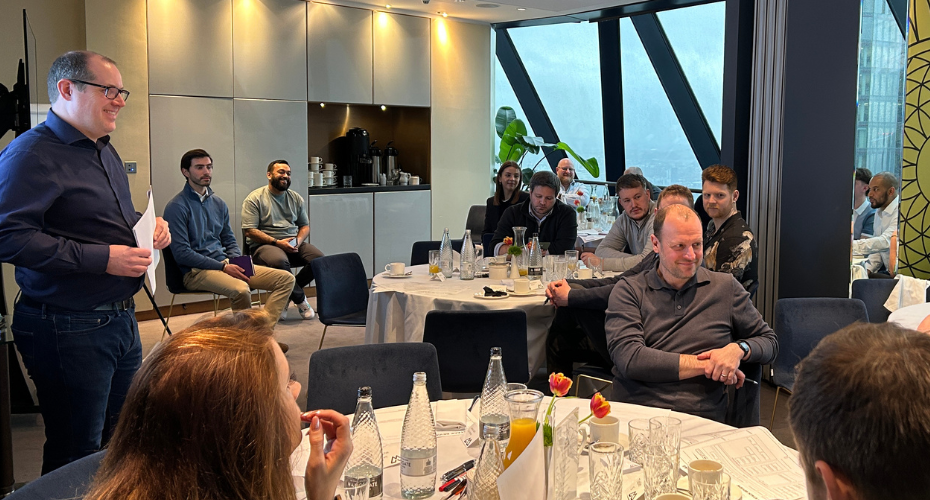


Guided by our panel of Change Management Experts we looked at how the right buying process will help you achieve the most successful outcome - no matter what tech you are looking to buy. A recap of all the insights from our event are below.
Section 1: Needs
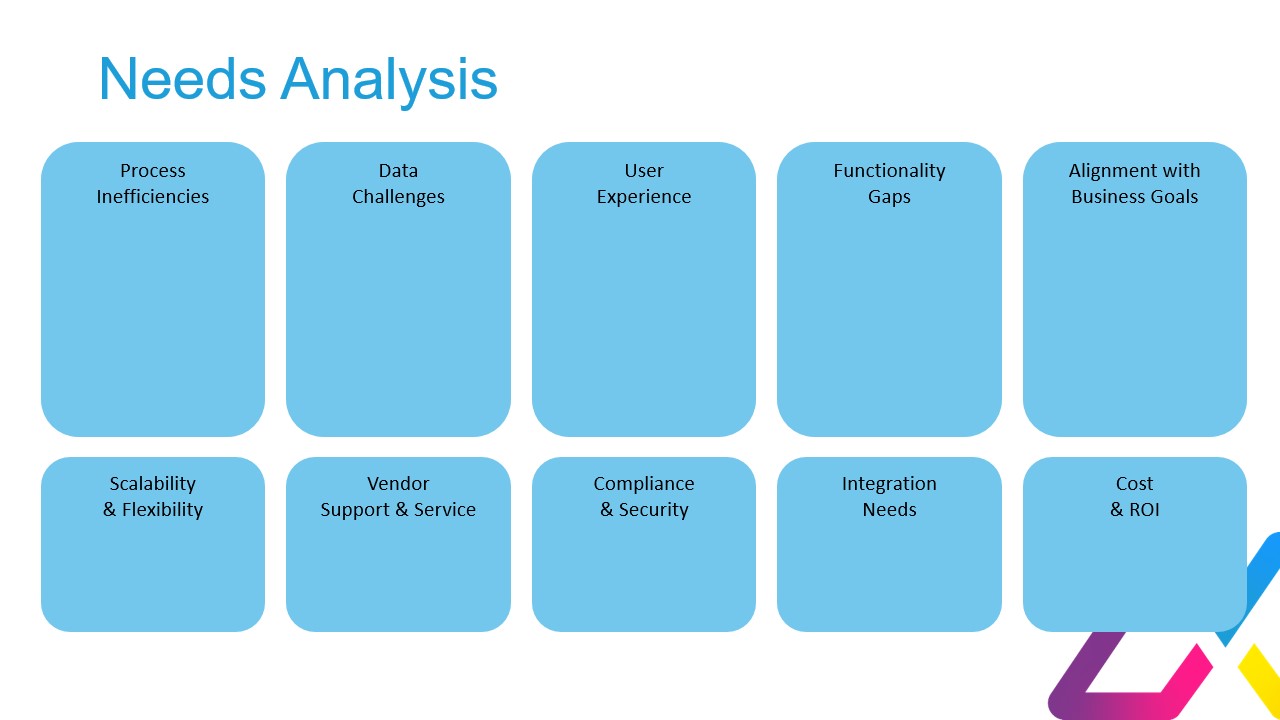
Identifying pain points and challenges in the current tech stack.
Categories included: Process, Data, User Experience, Candidate/Client Experience, Functionality Gaps, ultimately, ensuring these pain points align with your wider business objectives.
Section 2: Timescales
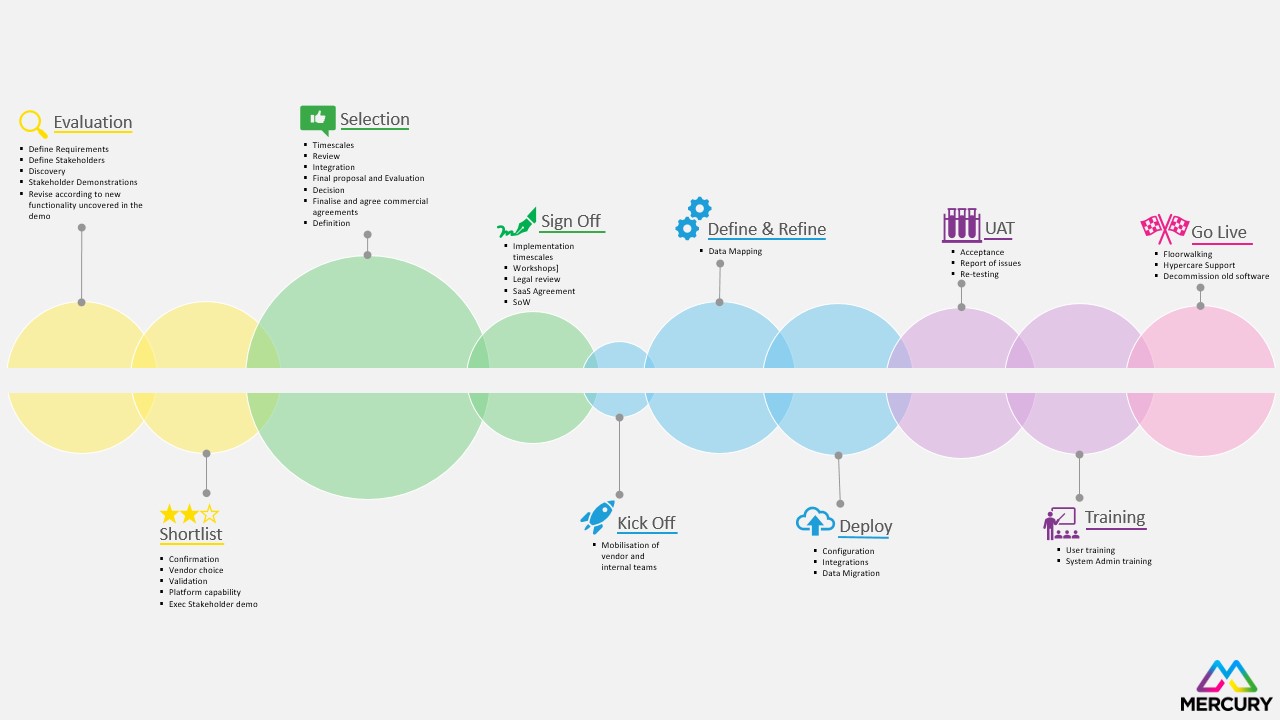
We start to map the stages and outline of a rough timeline for a CRM project taking into consideration your own timeline and how it aligns with your vendors timeline. Which strategies can you use to handle unexpected delays within your business?
Section 3: Stakeholders
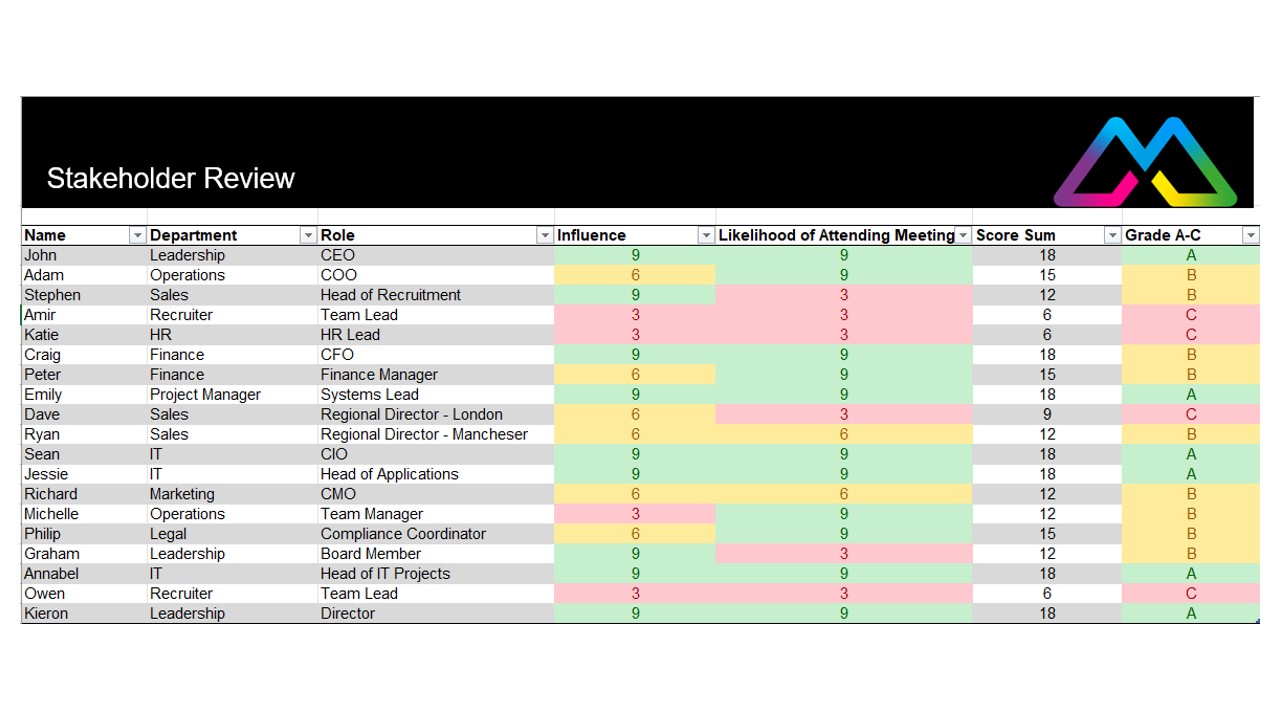
How to identify champions, users, and decision-makers. Whether a broad mix of voices or stakeholders that need to be involved regardless, how useful is their input? Is their likelihood of not taking part or derailing things a factor to consider?
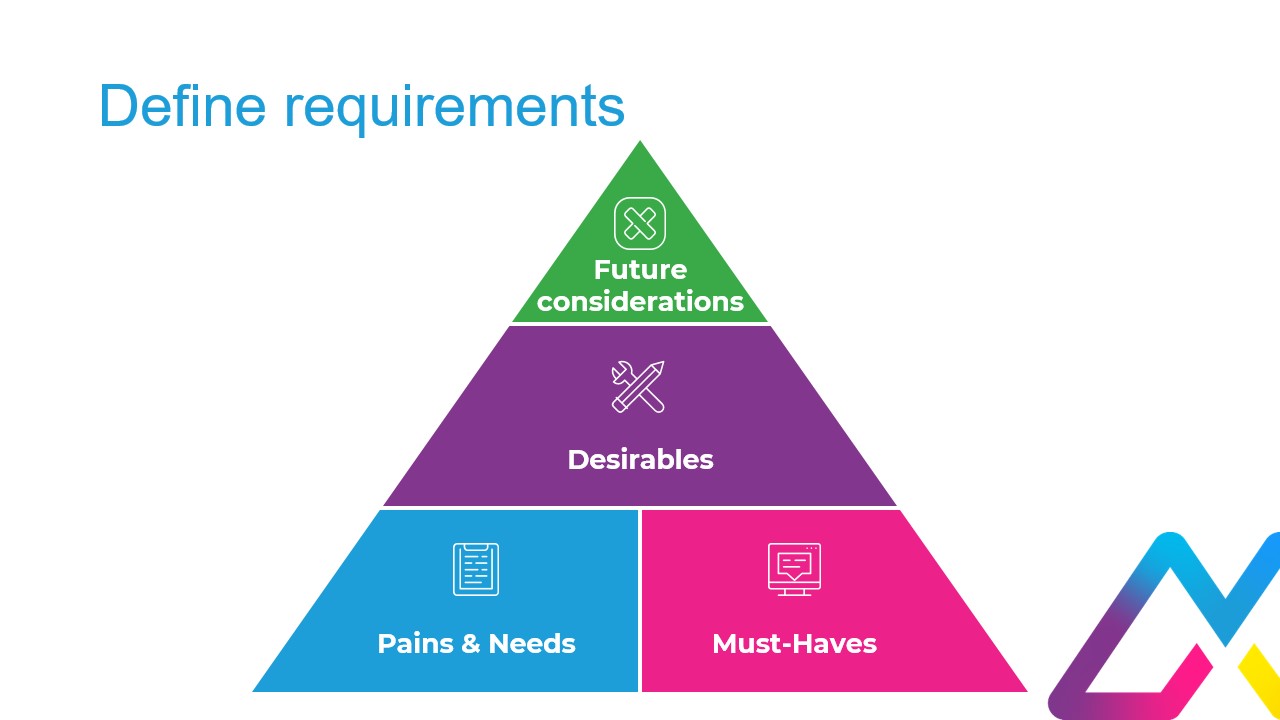
Section 4: Define Requirements
Saeed gave insight into how to refine a list into must haves, desirables and low priority.
Section 5: Board Buy-in
Building the compelling business case for change that resonates with both executive leadership and operational teams including tips of common hurdles and how to overcome them.
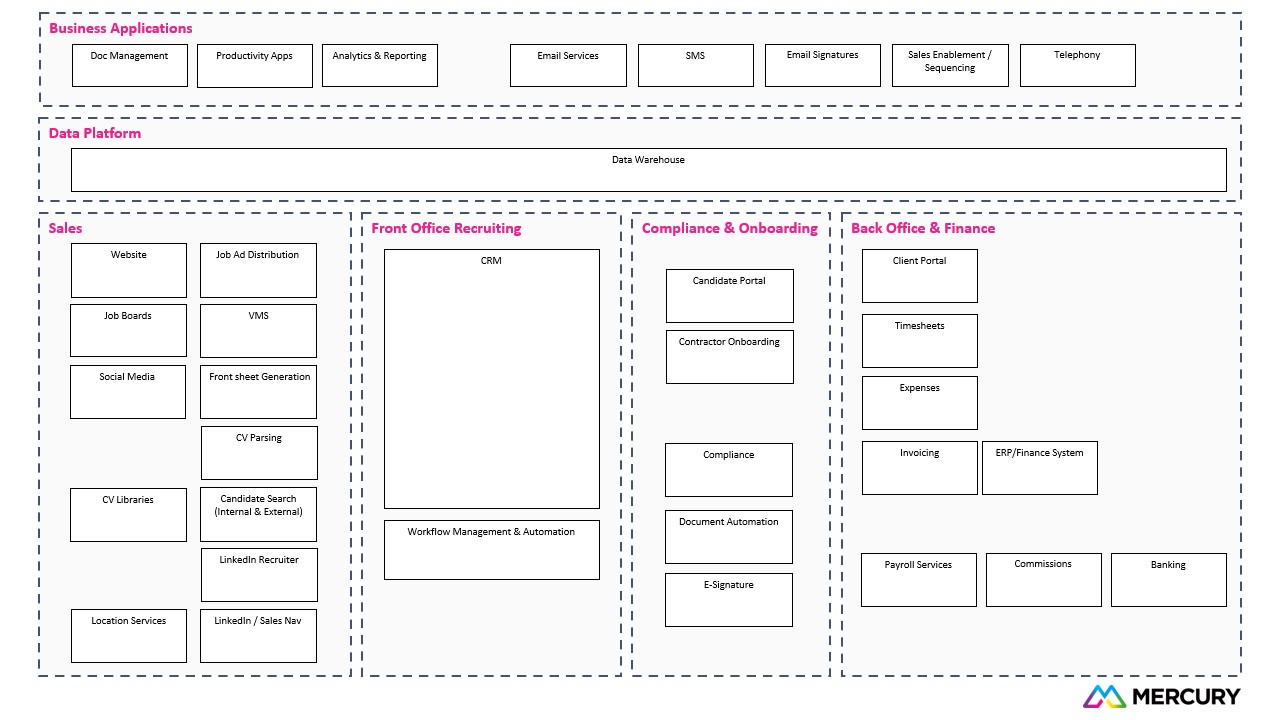
Section 6: Map Tech Stack
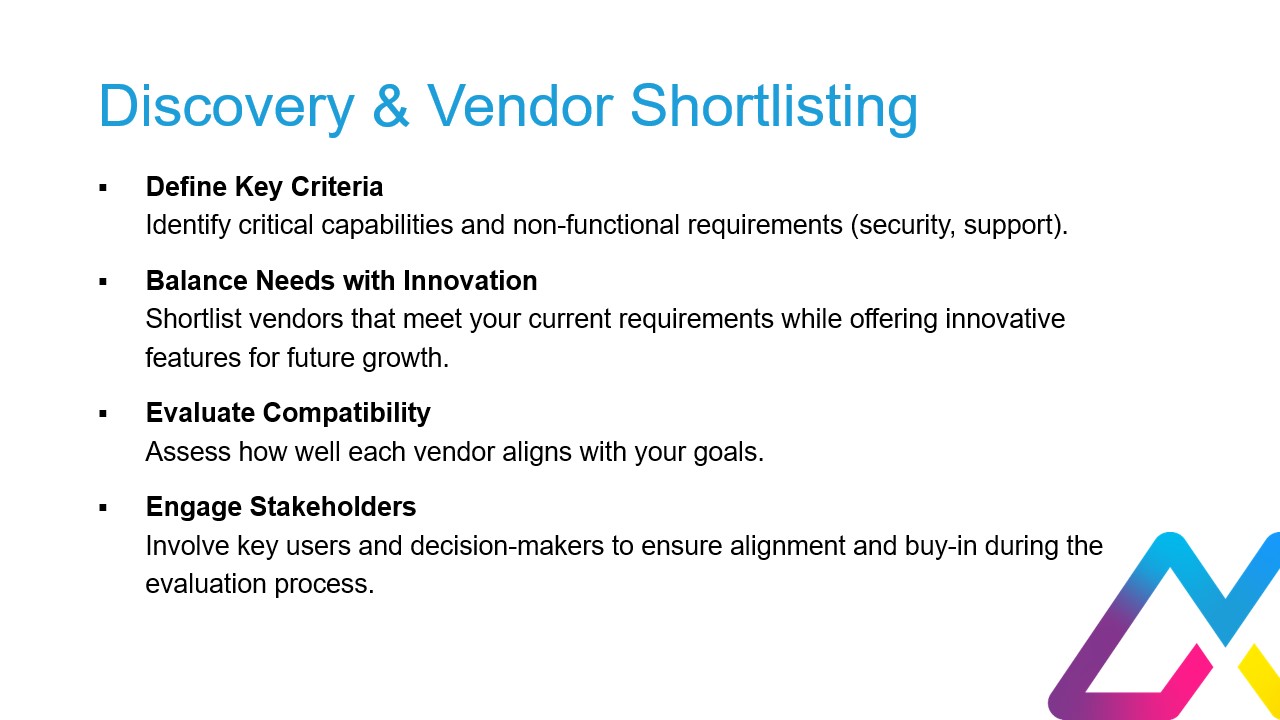
Section 7: Discovery and Shortlist
What to look out for in vendor demonstrations, what criteria to consider for evaluating vendors and their capabilities - what are the right things to ask in a demo?
Section 8: Budget & ROI
What else needs to be budgeted for? Training, data migration, project management? Are these upfront costs or monthly? Your budget needs to reflect this.
Reflecting within the room, measuring ROI varies business to business when it comes to projects and the roll out of tech.
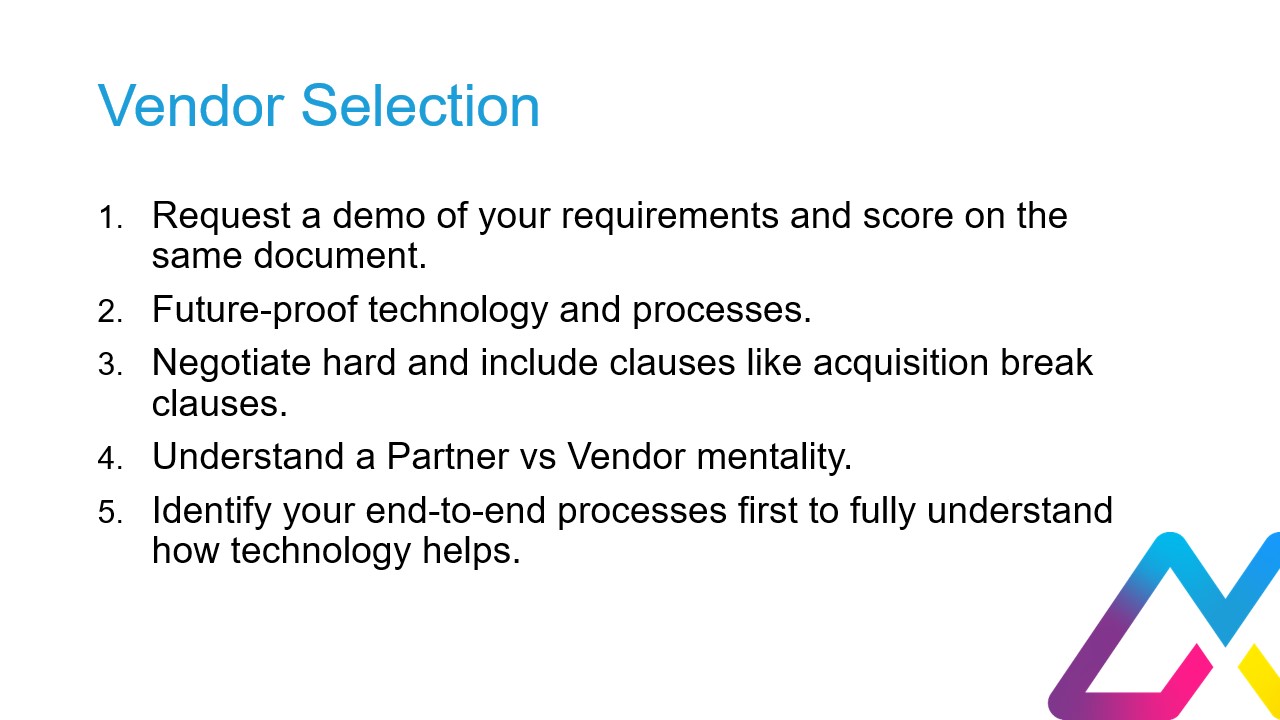
Section 9: Vendor Selection
Our panel's top 5 tips on choosing vendors.
Section 10: Data
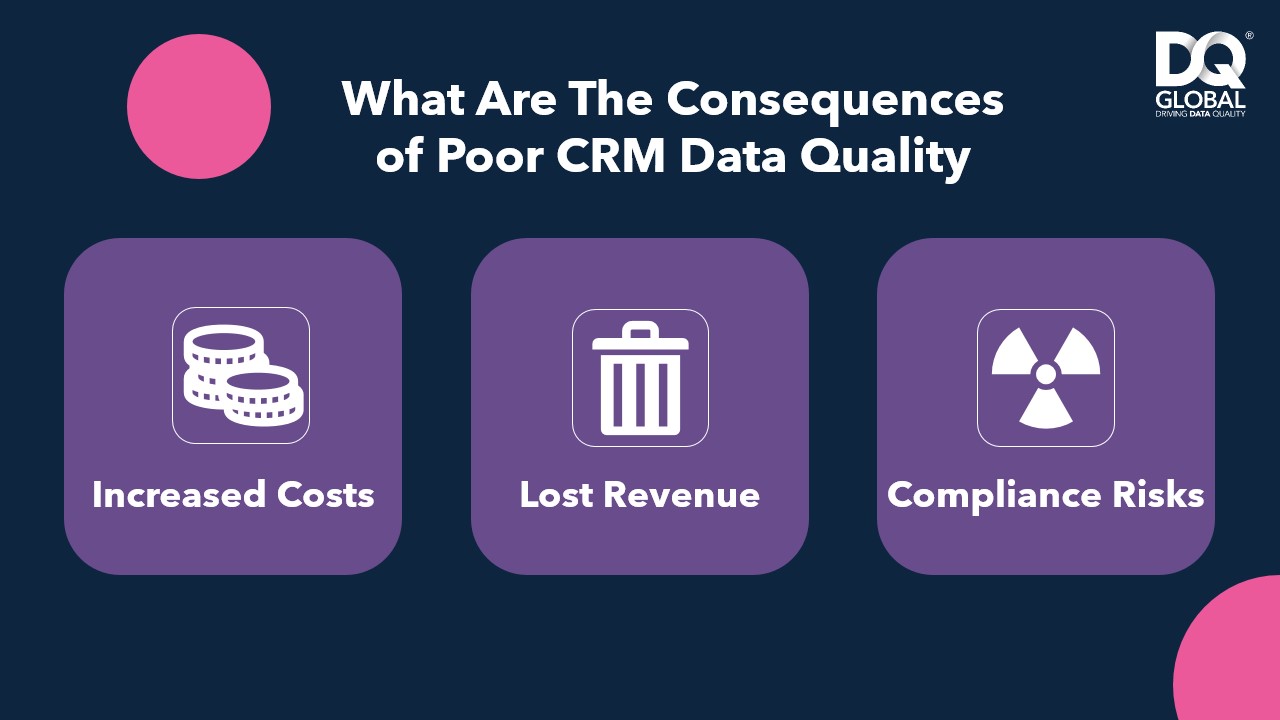
Conor from DQ Global then highlighted the considerations that are needed to the size of your database and how many silos you are likely to have as a result. Then, prioritise clean up based on your needs analysis before confirming which data needs to be migrated.
Section 11: Change Management Strategy
Ensuring your internal communications strategy to get buy in starts at the right time to ensure user adoption.
Section 12: Implementation and Go-live
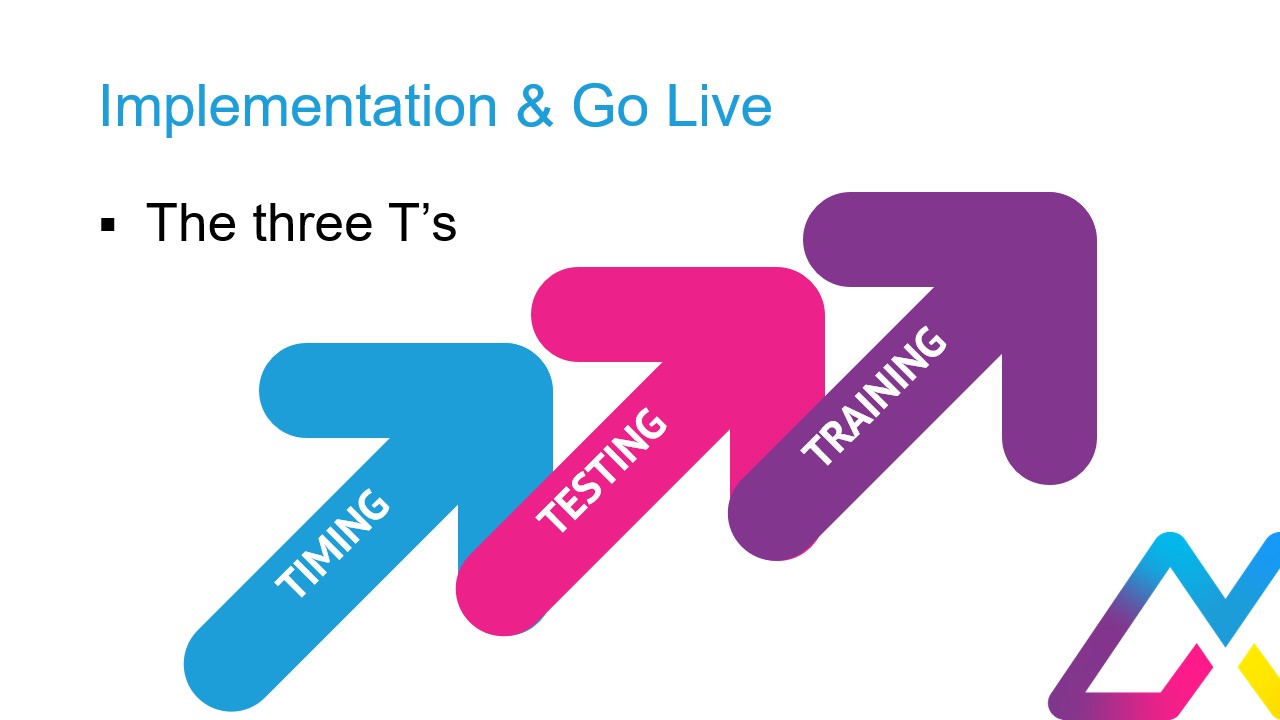
Key steps for successful go-live, including Timing, Testing and Training.
Future events
For more information about our upcoming events, please visit our events page.